




PMG dependency cooldown: wait on fresh npm versions
Table of Contents
PMG (Package Manager Guard) wraps npm, pnpm, pip, and other package managers so installs are checked against SafeDep threat intelligence and run in OS sandboxes before arbitrary install scripts touch your machine. For background, see Introducing Package Manager Guard (PMG).
Dependency cooldown is a separate control: it trims registry metadata so version resolution normally ignores releases that are too new. That reduces the window where a compromised or rushed publish is the only version a semver range can pick.
How cooldown works
When cooldown is on, PMG filters npm package metadata and drops versions published inside the configured window (for example, the last 5 days). If the range still matches an older release, the resolver uses it. If nothing outside the window satisfies the range, the install fails until you widen the range, wait, or bypass cooldown (see below).
Cooldown applies to metadata-driven resolution. It does not apply to flows that already use a fixed tarball URL (direct tarball installs, some lockfile or cache cases). See the upstream dependency cooldown notes for details.
Requirement: cooldown needs proxy mode enabled. It is npm-only in the current release.
Install and shell setup
brew install safedep/tap/pmgor:
npm install -g @safedep/pmgWire the shell once (restart the terminal after):
pmg setup installRe-run pmg setup install after upgrades so new options land in your environment.
Enable dependency cooldown
Configuration lives in config.yml (create it via pmg setup install if needed). Example:
dependency_cooldown: enabled: true days: 5Adjust days to your risk tolerance: longer windows mean more installs fall back to older versions; shorter windows allow newer releases sooner.
One-off install without changing the file:
pmg --skip-dependency-cooldown npm install expressDocs and source
- pmg
- npm
- supply-chain
- security
Author

SafeDep Team
safedep.io
Share
The Latest from SafeDep blogs
Follow for the latest updates and insights on open source security & engineering
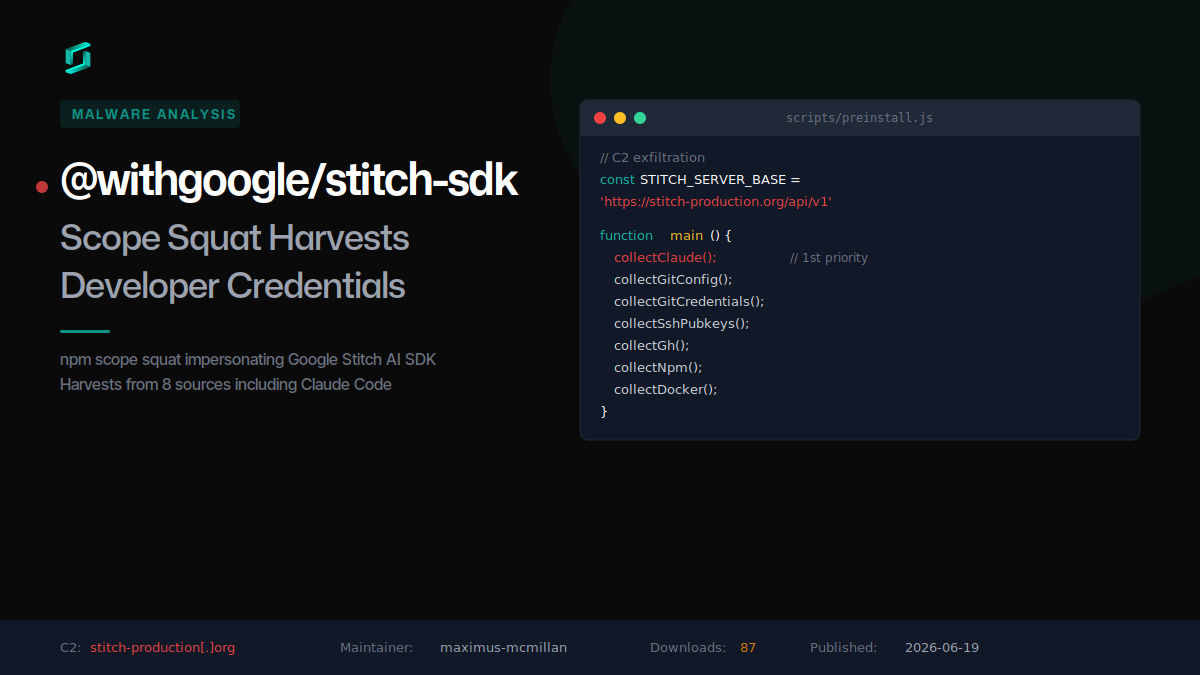
@withgoogle/stitch-sdk: Scope Squat Harvests Developer Credentials
A malicious npm package squats the @withgoogle scope to impersonate Google Stitch, silently harvesting credentials from Claude Code, git, GitHub CLI, SSH keys, npm, and Docker on install.

Mastra npm Scope Takeover: 143 Packages Drop a RAT
An attacker republished 143 @mastra packages, including @mastra/core, each with one injected dependency: easy-day-js, a dayjs clone whose install hook downloads and runs a remote access trojan.

Five npm Packages That Hide a Windows Binary Dropper
Five npm packages published in a 12-minute burst split a Windows binary dropper across a fake utility toolkit. The loader hides in a preinstall hook, decodes its C2 from a helper package, and fetches...
astro.config.mjs Supply Chain Attack via Blockchain C2
An obfuscated IIFE hidden in astro.config.mjs fires at every build, beacons an HTTP C2, and pulls staged commands from a Tron-to-BSC blockchain dead drop.


Ship Code.
Not Malware.
Start free with open source tools on your machine. Scale to a unified platform for your organization.
